
Millard County Bankruptcy Filings and Records
Millard County bankruptcy records are filed with the U.S. Bankruptcy Court, District of Utah. The county seat of Fillmore is notable as Utah's first state capital. Millard County is a central Utah county served by the Fourth District Court for state matters. Searching Millard County bankruptcy case records is done through PACER and the Utah XChange system. This page covers how to find Millard County bankruptcy filings online and who to contact for copies of case documents.
Millard County Quick Facts
Millard County Court and Clerk Information
All Millard County bankruptcy cases are handled by the U.S. Bankruptcy Court, District of Utah, at 350 S Main St, Salt Lake City, UT 84101. Phone: 801-524-6687. Chief Judge Peggy Hunt presides, and Clerk David A. Sime manages court records and operations. Millard County residents file their bankruptcy petitions with this federal court, which covers all Utah counties without exception.
For local Millard County matters, the Fourth District Court has jurisdiction over state civil cases. The Millard County Clerk can be reached at mrowley@millardcounty.gov or at 765 S Highway 99, Suite 6, Fillmore, UT 84631. The clerk's office manages county-level records, not federal bankruptcy filings. For bankruptcy case documents, PACER and the federal court are the right sources.
Fillmore, the Millard County seat, holds a unique place in Utah history as the state's first capital. This history means Millard County has older public records going back further than many other Utah counties. For historical Millard County court records, the Utah State Archives at archives.utah.gov is the appropriate resource.
Note: Central Utah Public Health maintains vital records including birth and death certificates for Millard County. Visit centralutahpublichealth.org for access to those records, which are separate from bankruptcy filings.
Millard County Vital Records and Related Resources
Central Utah Public Health Department serves Millard County residents for vital records including birth and death certificates. These records are maintained separately from court records and are not part of the bankruptcy filing system. Accessing Millard County vital records is done through the health department rather than the courts.
Central Utah Public Health at centralutahpublichealth.org covers Millard County and several surrounding central Utah counties. If you need birth, death, or marriage records related to a Millard County bankruptcy case, this is the office to contact. Vital records often come up in bankruptcy cases that involve estates or probate matters.
Utah Courts also provides forms and guidance for state court procedures that may relate to Millard County bankruptcy cases. Visit utcourts.gov for forms covering Fourth District Court proceedings in Millard County. State court documents differ from federal bankruptcy petitions but can be part of the same overall legal picture for a Millard County debtor.
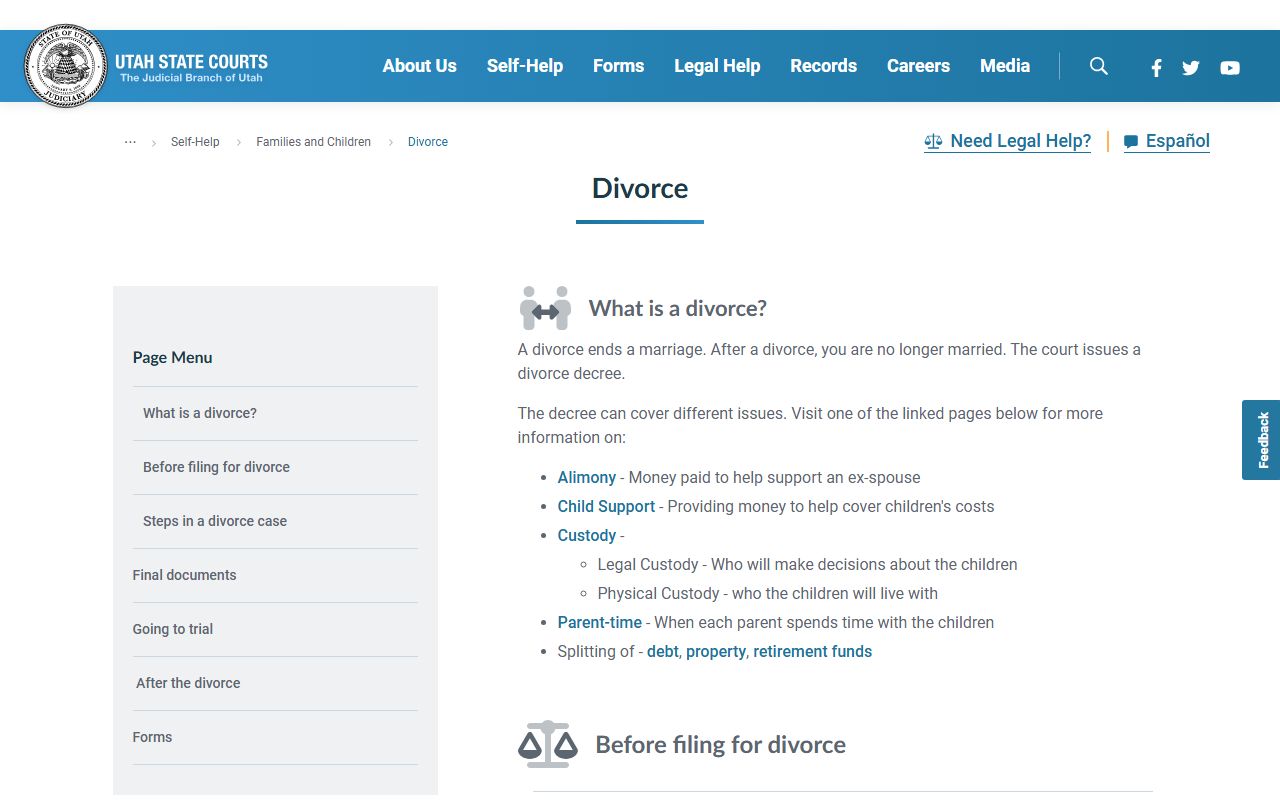
State court forms are separate from federal bankruptcy documents. A Millard County debtor may have related state court filings for property disputes, judgment enforcement, or family matters that appear in the XChange system alongside their federal bankruptcy case.
Search Millard County Bankruptcy Records Online
PACER is the main tool for accessing Millard County bankruptcy records online. Create a free account at pacer.uscourts.gov or call 800-676-6856. Log in and select the District of Utah to search by debtor name or case number. PACER returns docket entries, case summaries, and filed documents for all Millard County bankruptcy cases. Per-page fees apply for documents you download, but they are low for most searches.
The PACER Case Locator at pcl.uscourts.gov is a free national database. Use it to find a Millard County bankruptcy case without selecting a specific court first. This is helpful if you are unsure whether a case was filed in Utah or another state. The locator searches all federal bankruptcy courts at once.
XChange at utcourts.gov/xchange covers Fourth District state court records for Millard County. It does not include federal bankruptcy data. Use it alongside PACER to get a full view of court activity for a Millard County debtor.
Note: PACER is the definitive source for Millard County federal bankruptcy filings. XChange covers state court records only, which are a separate system entirely.
Millard County Bankruptcy Filing Types
The U.S. Bankruptcy Court for the District of Utah accepts Millard County filings under four chapters. Chapter 7 is a liquidation case. Chapter 13 is a repayment plan for individuals with steady income. Chapter 11 is used for business reorganizations. Chapter 12 is for family farmers and commercial fishermen, which can be relevant in central Utah's agricultural communities like those in Millard County.
Millard County is a large, rural county in central Utah. Agriculture and ranching are part of the local economy, which means Chapter 12 filings can appear for Millard County farming operations facing financial difficulty. Most individual filings from Millard County are Chapter 7 or Chapter 13 cases.
Each chapter type produces a different set of court documents. A Chapter 7 case in Millard County will have a petition, schedules, a trustee report, and either a discharge or dismissal order. A Chapter 13 case will also have a repayment plan, confirmation order, and monthly payment records. All of these are accessible in PACER for Millard County cases.
Phone and In-Person Millard County Record Access
McVCIS is a free automated phone system for checking Millard County bankruptcy case status. Call 866-222-8029, extension 83. The system is available around the clock. You can hear filing dates, discharge status, and case numbers for Millard County cases without logging into any computer. This is helpful for quick status checks when you do not need full document copies.
For copies of Millard County bankruptcy documents, visit the U.S. Bankruptcy Court clerk at 350 S Main St, Salt Lake City, UT 84101. You can also request copies by phone at 801-524-6687 or submit a written request by mail. The clerk's office can search by debtor name or case number and provide certified or plain copies of Millard County bankruptcy filings.
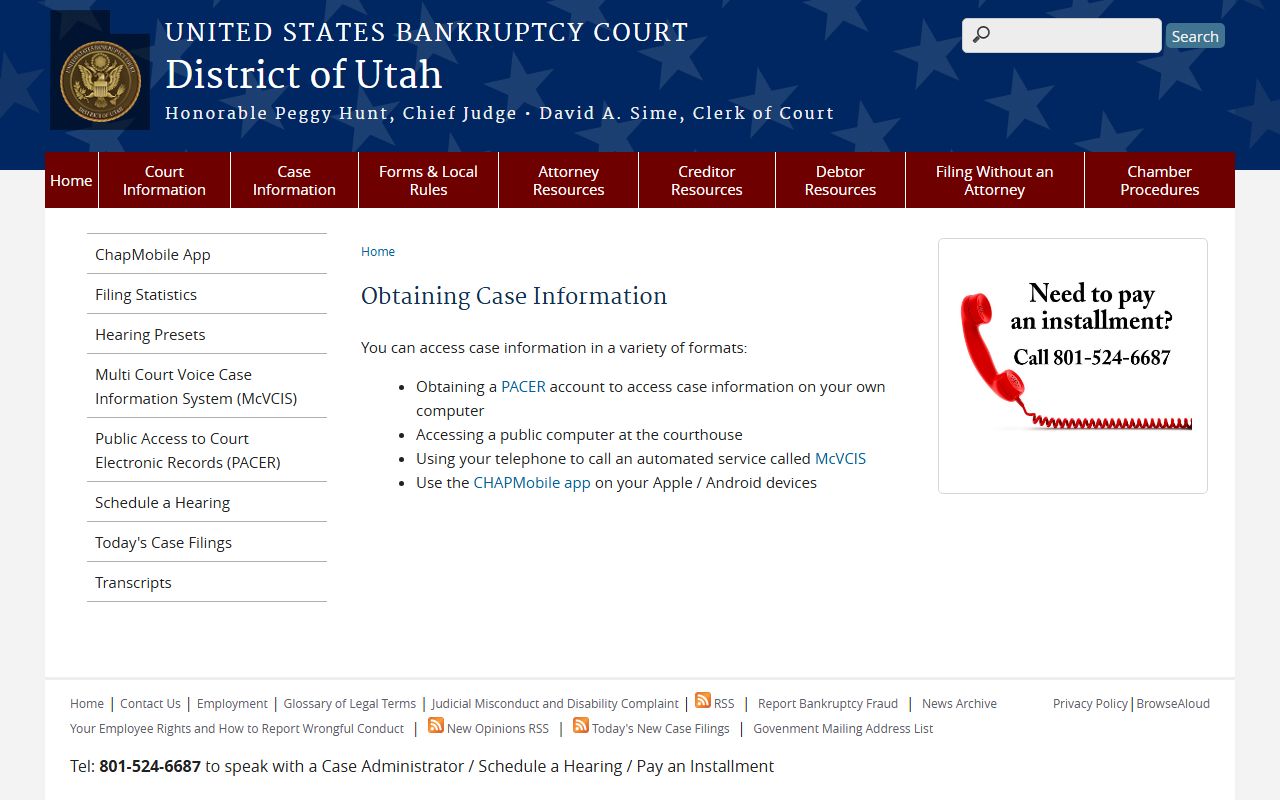
The court's guidance page at utb.uscourts.gov/obtaining-case-information explains how to request Millard County case records, what fees apply, and how long copies take to process. Certified copies of Millard County bankruptcy orders cost more than plain copies but are required for some legal purposes.
Historical Millard County Bankruptcy Records
Older Millard County bankruptcy records may be held at the Utah State Archives rather than in PACER. The Utah State Archives preserves court records from across the state. Access to those records is governed by GRAMA under Utah Code 63G-2. Submit a records request at archives.utah.gov to find historical Millard County bankruptcy filings that predate the electronic record systems.
For very old federal bankruptcy filings from Millard County, the National Archives may hold the physical case files. The U.S. Bankruptcy Court can direct you to the right archive location based on the filing date. Cases filed before the 1980s are most likely to be in physical-only form.
The Federal Rules of Bankruptcy Procedure govern how all Millard County bankruptcy cases are filed and managed. These rules apply equally across all Utah counties. Visit federalrulesofbankruptcyprocedure.org for the full text of the rules that govern Millard County and all other federal bankruptcy cases.
Cities in Millard County
Millard County is a large central Utah county with Fillmore as its county seat and historical first state capital. All Millard County bankruptcy filings go to the U.S. Bankruptcy Court, District of Utah, regardless of which community the petitioner resides in.
There are no separately tracked cities in Millard County for this records directory at this time.
Nearby Counties
Millard County is surrounded by other central Utah counties. All share the same U.S. Bankruptcy Court for the District of Utah. When searching for a case tied to the central Utah region, check the debtor's address on the filed petition to confirm the correct county.